
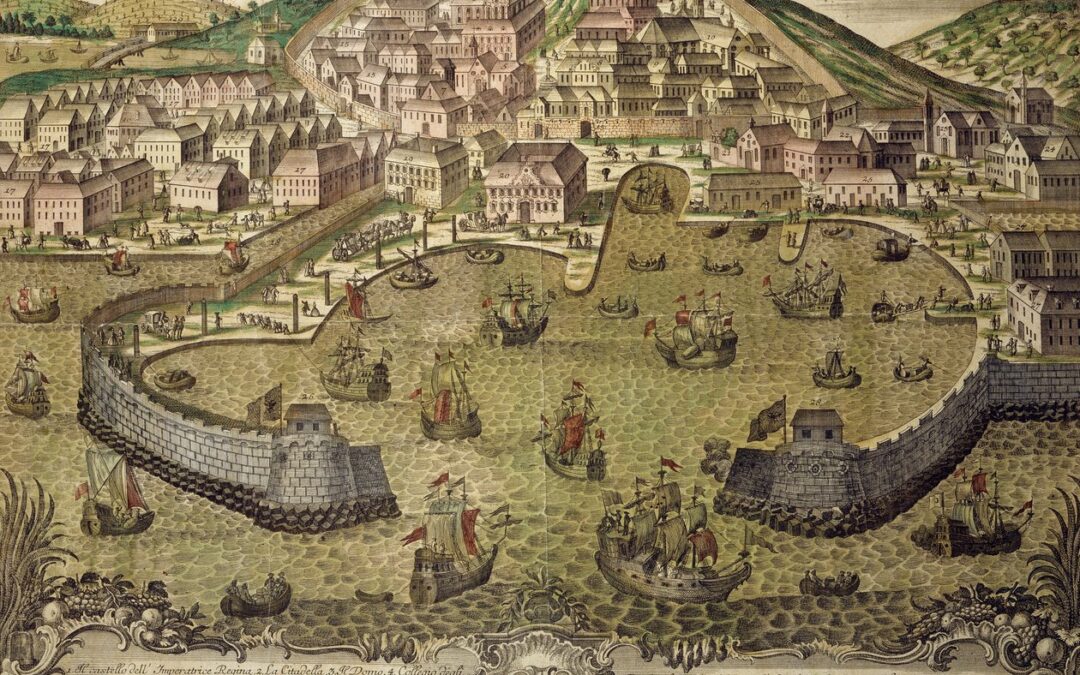
Trieste, Crossroads of Trade: From Imperial Rome to the Present Day
Trieste is a city born from trade and for trade, a historic bridge between Central Europe and the Mediterranean, between the West and the East. Its identity has been forged through centuries of exchanges, foreign influences, and multiculturalism, making it one of Europe’s main commercial crossroads.
Origins: Tergeste, Roman Colony
It all began with Tergeste, founded by the Romans between the 1st century BCE and 52 BCE, thanks to its strategic position along the routes of oil, wine, salt, and agricultural products toward the Adriatic Sea and the hinterland. Even after the fall of the Roman Empire, Trieste preserved its maritime vocation, sustained by agriculture, olive growing, and fishing.
From the Middle Ages to the Habsburgs: Struggles and Revivals
Throughout the Middle Ages and the Modern Era, Venetian and Austro-Hungarian rule alternated. Venice included Trieste in its trade routes but imposed restrictions on strategic goods such as salt and textiles. These relations were often conflictual, yet they helped place Trieste at the center of traffic between northern and southern Europe.
In the 14th century, the city came under Habsburg protection, a turning point that eventually transformed Trieste into a great European port. The decisive moment came in 1719 when the Austrians declared Trieste a free port. Customs barriers were removed, commercial freedoms encouraged, and services such as the Chamber of Commerce and the Stock Exchange were established—urban icons still visible today. The city became a reference point for major navigation and insurance companies of the Austro-Hungarian Empire.
Merchant Cosmopolitanism: The Role of Foreign Communities
During the 18th and 19th centuries, Trieste turned into a commercial metropolis where entrepreneurs from many backgrounds actively worked: English, Ottomans, Jews, Slavs, and especially Greeks. The Greek community, favored by Habsburg liberties, opened new routes toward the Levant and Eastern Mediterranean, founding businesses, consulates, diplomatic networks, and import-export companies specializing in textiles, oils, wines, and spices.
For the Greeks, Trieste became a true capital of commerce, a precious hub connecting the trade of Smyrna, Marseille, Constantinople, and Ancona. Their ability to build international networks and enjoy religious tolerance reinforced the city’s cosmopolitan spirit, which still defines Trieste today.
19th and 20th Centuries: Growth and the Challenge of Modernity
In the 19th century, Trieste expanded thanks to industrialization, new railway connections, and major structural investments. Modern piers, warehouses, and nautical schools were built, and the port became a key transit point between Central Europe and the Mediterranean. Austrian insurance and shipping companies consolidated the city’s role in global logistics, fostering the growth of financial and commercial services.
In the 20th century, Trieste endured wars and crises but continued to defend its status as a trade hub. After World War II, the port strengthened its position among the most active in Europe, now specializing in containers, petroleum products, and international railway traffic.
Trieste Today: Commercial and Cultural Identity
Even in the 21st century, Trieste maintains its mercantile soul. Piazza della Borsa, the Chamber of Commerce, and the city’s historic cafés narrate its glorious past while representing its dynamic present. Legacies from the Austrians, Venetians, and Greek merchants can still be seen in its grand halls, 19th-century palaces, and boutiques overlooking the squares.
Its role as a commercial bridge between West and East, Central Europe and the Mediterranean, remains strong. This cosmopolitan history—born at sea and shaped by great merchants—lives today through modern logistics, international culture, and urban vitality.
For centuries, Trieste has drawn its inexhaustible energy from freedom, the sea, and the meeting of economies. Here, commerce is not just economic activity, but true identity and vital force.
Massimo Battistutta
Culture and tourism